
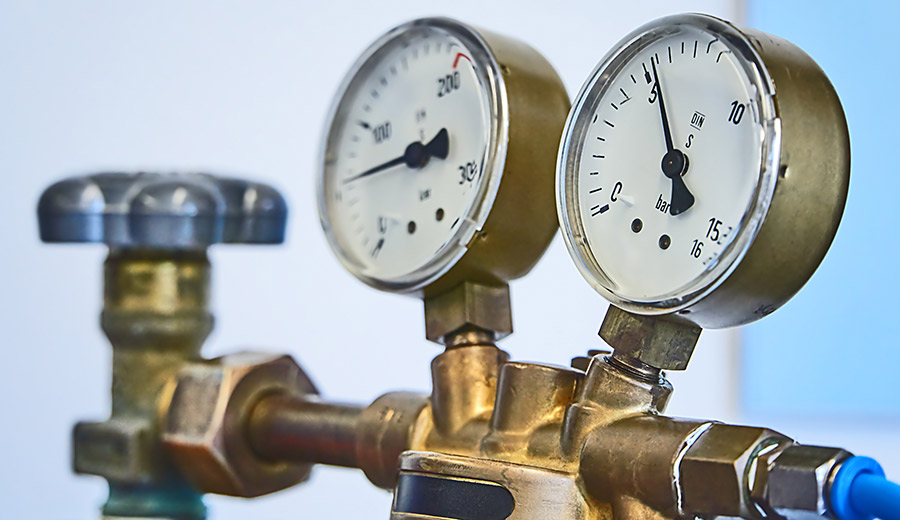
When customers call LJ Star asking for a sight glass “rated for full vacuum,” it’s one of the most common yet most misunderstood queries we receive. Like a pressure rating stamped on a vessel, the term “full vacuum” can look definitive on paper while telling only part of the story. In fact, it often acts as the gateway to a more nuanced conversation about what’s actually happening in a process system and what’s truly required to keep it running safely and efficiently.
Here’s what you need to understand about vacuum service, full vacuum and how to specify a sight glass that genuinely meets your process needs.
Full Vacuum: What It Actually Means
Technically speaking, full vacuum, sometimes called absolute vacuum, refers to the complete absence of pressure, which is approximately one bar of differential pressure acting from the outside in. Unlike positive pressure, which pushes outward from the vessel, vacuum draws inward, creating conditions where even the smallest leak path allows air (or other gases) to migrate into the process.
Achieving and sustaining a true full vacuum in a closed system is a significant engineering challenge. Every weld, seal and connection point becomes a potential pathway for air infiltration. That’s why industries with the most demanding vacuum requirements, such as cryogenic vessels or certain semiconductor processes, rely on specialized designs such as the ConFlat (CF) gasket system. The CF system creates a metal-to-metal seal specifically engineered for deep, sustained vacuum.
When Deep Vacuum Truly Is the Requirement
ConFlat is an ultra-high vacuum flange design in which two stainless steel flanges with knife-edge ridges are bolted together, biting into a soft metal gasket, typically copper, to create a seal that is virtually impermeable to gas at the molecular level. Critically, that knife edge must press into metal, not glass.
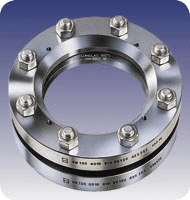
A conventional sight glass with an exposed glass sealing surface simply cannot accommodate this design. LJ Star’s METAGLAS® sight glass addresses this limitation through a construction in which borosilicate glass is fused directly inside a stainless steel ring, combining the transparency of glass with a metal sealing surface. That metal sealing surface is what makes CF compatibility possible, so when a system truly requires it, engineers aren’t forced to sacrifice process visibility to achieve it.
That said, the vast majority of industrial processing applications never reach this level of requirement.
The More Useful Question: Are You Pulling or Maintaining?
In the vast majority of process systems we encounter in industries such as pharmaceutical manufacturing, chemical processing or food/beverage production, the vacuum is not static. It’s dynamic. A vacuum pump is continuously running, constantly pulling air out of the system and maintaining the required vacuum level. This is what we call vacuum service, and it’s a fundamentally different engineering situation than holding a sealed, static vacuum.
If a system is continuously drawing vacuum, a minute amount of ambient air infiltration through a gasket or fitting is rarely a problem. The pump compensates. What matters is that any leakage is insignificant relative to the pump’s capacity to maintain the required vacuum level. In these applications, which represent 99% of what we see in process industries, a properly specified sight glass with an O-ring seal performs extremely well.
This distinction matters enormously when specifying equipment. When a customer tells us they need “full vacuum,” our first questions are:
- Is there a vacuum pump running continuously, or does the system need to hold vacuum without a pump?
- What is the target vacuum level in absolute pressure terms?
- What seal and connection designs are used in the rest of the system?
- Is the concern about air infiltration related to process quality, reaction chemistry or safety?
The answers almost always reveal that vacuum service is the real requirement and not a static, sealed full vacuum.
When Air in the Process Is the Real Concern
Why do process engineers pull a vacuum in the first place? In many applications, air is simply an undesirable process medium. In one extreme example, the pickling process in steel manufacturing, air infiltration can create genuinely hazardous conditions.
In most cases it’s not quite that dangerous or extreme. Typically, oxygen is unwanted because it can interfere with chemical reactions, affect product quality or alter the properties of sensitive pharmaceutical compounds. Keeping air out of the process protects the integrity of what’s being manufactured.
These vacuum applications call for an entirely different level of engineering rigor, specialized seal designs and rigorous leak testing protocols. This presents a compelling reason to get the specification right, and it shapes a different set of design decisions.

Vacuum Shows Up Where You Least Expect It
The staff at LJ Star consistently observes that vacuum service isn’t limited to systems explicitly designed around it. Tanks and vessels can experience vacuum conditions even when that’s not the intent: a blocked vent during liquid transfer or draining, vapor condensation after a steam sterilization cycle, or significant temperature changes can all pull a vessel below atmospheric pressure. Under ASME and similar design codes, if there is any risk of vacuum occurring, equipment must be rated for it. That means every component in the system, including sight glasses and visual flow indicators, needs to meet specified ratings. Knowing whether you’re dealing with intentional vacuum service or incidental vacuum exposure is another reason the specification conversation matters.
Getting the Specification Right
If you’re specifying a sight glass for a vacuum application — whether it’s a new system build, a process line conversion, or adding an observation port to an existing vessel — the most important step is to move beyond the “full vacuum” shorthand and describe the actual operating conditions by answering the earlier questions.
With those answers in hand, LJ Star’s application specialists can recommend the right sight glass design, seal material and connection style to meet your requirements, without over-specifying or under-delivering.
Vacuum service is one of those areas where the terminology can obscure the real engineering question. We’re here to ask the right questions and make sure you get a solution that’s genuinely good for your process.
Frequently Asked Questions
Can a standard sight glass withstand full vacuum?
Most standard sight glasses can handle vacuum service — meaning continuous vacuum drawn by a pump — when fitted with an O-ring seal rather than a flat gasket. True static full vacuum requires more specialized designs, such as a ConFlat-style metal-to-metal seal, which is achievable with METAGLAS® sight glasses due to their stainless-steel ring construction.
What is the difference between vacuum service and full vacuum in process systems?
Full vacuum refers to the near-complete absence of pressure, or roughly one bar of differential pressure acting inward. Vacuum service describes the far more common scenario in which a vacuum pump continuously maintains a required vacuum level in an operating process. In vacuum service, minor air infiltration is compensated by the pump and rarely affects performance, making it a less demanding specification than static full vacuum.
What industries commonly require vacuum-rated sight glasses?
Pharmaceutical and biotech manufacturing are among the most frequent users of vacuum service in the process industries, though chemical processing and food and beverage applications also use vacuum in certain processes. The requirement can arise in both new system designs and retrofit situations, for example, when adding an observation port to an existing vessel that operates under vacuum.
What industries commonly require vacuum-rated sight glasses?
Vacuum service appears across virtually every process industry, though the reasons vary. Pharmaceutical and biotech manufacturing use vacuum to protect sensitive compounds from oxygen exposure. Food and beverage producers rely on it for extraction, evaporation, and cooking processes. Vacuum allows products like jams and fillings to cook faster at lower temperatures. Chemical processing applications include reactors, degassers, dryers, and solvent removal systems. Vacuum also arises in situations that aren’t always anticipated at the design stage: a blocked vent during tank draining, condensation after a CIP/SIP cycle, or significant temperature swings can all create vacuum conditions. ASME design codes often require equipment to be rated for vacuum simply because there is some risk of it occurring — meaning a vacuum-rated sight glass may be a code requirement even when vacuum isn’t the primary operating condition.

Subscribe to our Blog
Categories
Certifications
Company
Goetze Safety Relief Valves
In The News
Industry Information
METAGLAS® Sight Glasses
PackExpo 2020
Sanitary Clamps
Sanitary Fittings
Sight Flow Indicator Benefits
Sight Glass Applications
Sight Glass Construction
Sight Glass Lighting
Sight Glass Lights
Sight Glass Process Vessel Camera
Sight Glasses
Trade Shows
Webcast