

Whether the maintenance team is stretched thin or just doesn’t conduct routine and regular inspections, sight glass systems rarely fail without warning. In one notable example, a plant was running approximately 20 sight glasses well past their recommended service intervals. Budget pressures led the team to focus on replacing gaskets alone, while ignoring visible chemical etching and minor cracking on the glass itself. The result: an operator could no longer reliably read tank level through the degraded sight glass.
This lack of visibility led to a tank overflow that triggered product disposal, extensive cleanup and regulatory documentation. The cost of addressing the incident far exceeded what a structured replacement program would have required. This pattern repeats itself across process industries, yet it is entirely preventable.
Process optimization systems, which can encompass sight glasses, sight flow indicators, level gauges, LED lighting and process vessel cameras, are not passive components. They are active safety and quality-control elements, and when they age without a maintenance or upgrade strategy, the consequences range from nuisance leaks to costly production incidents. Here is how maintenance and project engineers can get ahead of the problem.
Warning Signs Your Sight Glass or Observation System Is at Risk
The most common early indicators of a compromised process observation system are also easy to dismiss. A chemical attack, common in systems handling acids, caustics or solvent-based media can cause discoloration, hazing or pitting on the glass surface. A sight glass that was once clear and is now visibly clouded may still be “working,” but its structural integrity is degraded. Weeping around the flange face or the sight glass body points to gasket failure, which often precedes a full seal breach. On camera systems, degraded image quality, frequent sensor replacements, or housing corrosion that requires repeated sealing are all signals the assembly is fighting a losing battle against the process environment.
Another underappreciated warning sign is age itself. Many chemical plants are running sight glass assemblies installed 20, 30 or even 40 years ago, often with glass panes that have never been replaced. Industry guidance generally recommends inspection cycles and glass replacement intervals based on:
- pressure class
- temperature range
- media exposure
If your plant has no documented replacement schedule for these components, that is a red flag.
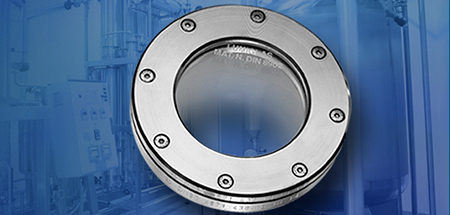
Diagnosing Leaks, Stress Fractures and Corrosion Damage
When inspection reveals a concern, the next step is systematic diagnosis before replacement decisions are made. Leaks at the gasket face often indicate gasket compression loss or chemical degradation of the seal material—common in systems where the original gasket was specified for a less aggressive medium than what currently runs through the line. Replacing the gasket with a chemically compatible material (PTFE, graphite or specialty elastomers depending on the medium) can resolve the leak without replacing the full assembly.
Stress fractures that occur on fused glass borosilicate sight glasses are more serious. They typically appear as fine radial cracks from the glass edge, often caused by thermal shock, overtightening of retaining hardware or misaligned flange faces. A stress-fractured glass pane must be replaced immediately—the glass is under compression and failure can be sudden. Corrosion damage to the body or retaining flange, particularly pitting or wall thinning visible on inspection, means the structural housing itself has been compromised and a full assembly replacement should be planned.
When to Replace Glass vs. Entire Assemblies
Not every problem requires a full assembly replacement, and part of smart asset management is knowing the difference. Glass-only replacement is appropriate when the body, flange, retaining hardware and gasket surfaces are in sound condition and the failure mode is limited to the glass pane itself—surface chemical attack, minor clouding, or a planned service-interval swap. Many sight glass designs, including METAGLAS® fused borosilicate windows from LJ Star, are engineered for straightforward glass replacement within an otherwise serviceable housing.
Full assembly replacement makes sense when the body shows corrosion or stress damage, when the pressure or temperature rating of the existing unit no longer matches current process conditions, or when the assembly design is obsolete and replacement glass or seals are no longer readily available. In older plants, this last point is increasingly common—sourcing glass for a 1970s-era sight glass body can become a quarterly scramble. Standardizing current product lines with available spare parts is a meaningful reliability improvement.
Upgrading to Higher-Pressure or Higher-Temperature Solutions
Process intensification, feedstock changes and equipment upgrades frequently push operating conditions beyond what original observation systems were designed to handle. A sight glass specified for 150 psi at 300°F may be running in a line that has since been re-rated to 300 psi at 400°F, which is well outside its design envelope, even if it has not yet failed.
Upgrading in these situations does not always require vessel modification. Many modern sight glass assemblies are available in higher pressure classes, up to 3,000 psi or beyond for specialty industrial models, and in temperature ratings that accommodate steam lines, thermal oil systems, and high-temperature reaction vessels. For environments with strong chemical exposure, fused borosilicate glass designs that place the glass in compression provide substantially greater resistance to both chemical attack and pressure cycling. When camera systems are involved, selecting enclosures with appropriate pressure ratings, chemical-resistant lens materials, and sealed electronics prevents the incremental corrosion failure that plagues camera installations in harsh environments.
Improving Worker Safety Without Redesigning the Vessel
One of the most important upgrades available to legacy chemical plants requires no vessel modification at all: moving operators away from direct sight glass viewing of hazardous processes. Process vessel cameras allow operators to monitor mixing, reaction, separation and filling operations from a safe distance, eliminating the need to stand directly adjacent to pressurized equipment containing corrosive or toxic media.
For plants where sight glasses must remain as primary observation points, several retrofit safety improvements are possible. Protective shields, made of mica, FEP, or Kel-F, can be mounted on the process side of the glass to extend service life and reduce the risk of chemical contact in the event of glass failure. (It should be noted that our METAGLAS® fused sight glass has never had a known failure in the field.) Guard rings and deflection shields on the atmospheric side protect operators from glass fragments in the event of a catastrophic failure. Process lighting upgrades improve visibility through sight glasses and camera systems, reducing the risk of misreading process conditions that could lead to unsafe operator decisions.

Planning for Long-Term Reliability
The most effective process observation upgrade programs treat these components the way they treat rotating equipment: with documented inspection intervals, defined replacement criteria, spare parts inventory and engineering review when process conditions change. Key elements of a long-term reliability plan include:
- establishing a criticality ranking for sight glasses and cameras based on the hazard potential of the process medium and the consequences of an unplanned failure
- defining glass replacement intervals based on pressure class, temperature, and chemical exposure rather than waiting for visible degradation
- maintaining a bill-of-materials that identifies currently available replacement components for every observation system in the plant
- triggering engineering review any time a line is rerated or feedstock chemistry changes
Aging process observation systems are a manageable risk—but only when they are actively managed. For chemical plants running legacy equipment, the combination of targeted diagnostics, glass or assembly replacement based on condition rather than crisis, and thoughtful upgrades to higher-rated or camera-based solutions can significantly reduce both safety exposure and unplanned downtime. LJ Star offers a broad range of sight glasses, METAGLAS® fused borosilicate windows, process vessel cameras, and process lighting solutions designed for the demands of chemical processing and other harsh industrial environments. To learn more or request a consultation, visit www.ljstar.com.

Subscribe to our Blog
Categories
Certifications
Company
Goetze Safety Relief Valves
In The News
Industry Information
METAGLAS® Sight Glasses
PackExpo 2020
Sanitary Clamps
Sanitary Fittings
Sight Flow Indicator Benefits
Sight Glass Applications
Sight Glass Construction
Sight Glass Lighting
Sight Glass Lights
Sight Glass Process Vessel Camera
Sight Glasses
Trade Shows
Webcast