
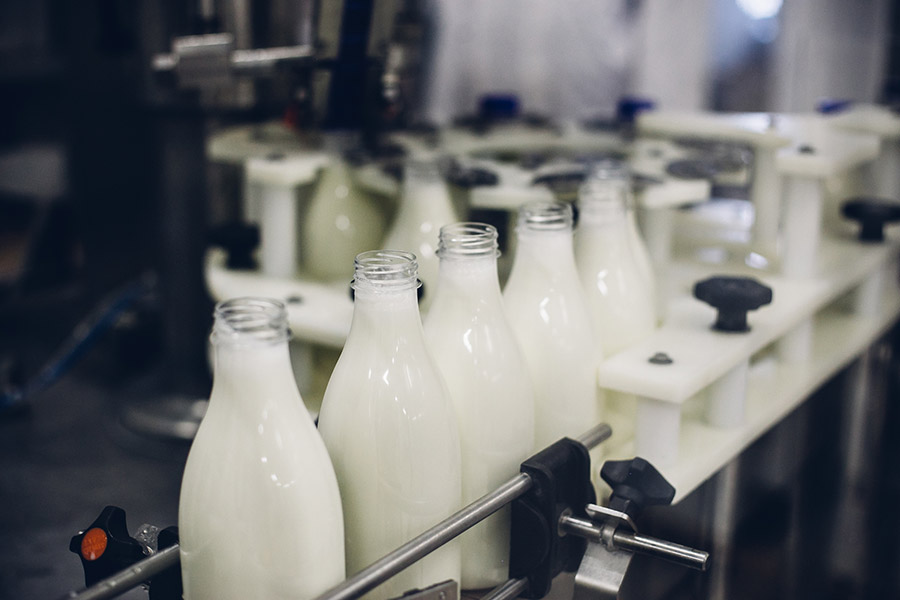
The dairy industry is experiencing a seismic shift in demand. With around 12% of US consumers now using GLP-1 medications for weight management, processors are racing to meet surging demand for protein-rich dairy products. Consider these trends:
- Households using GLP-1 medications consume yogurt at nearly three times the average rate. Whey protein is expected to grow at 7.7% annually through 2033.
- Examining 2024 figures, US whey protein sales reached $705 million, an 8.6% year-on-year increase.
- Demand has become so intense that US whey protein isolates and concentrates are “essentially unavailable” as suppliers have sold well into 2026.
What does all this mean for dairy processors?
This protein boom shines a spotlight on a set of dairy ingredients already high in value. While traditional commodity dairy faces headwinds, processors focused on whey powders, nutritional proteins, infant formula and high-protein yogurts are investing in expanded capacity and more sophisticated quality control. The question facing these operators: as production scales up and margins tighten due to raw material constraints, how do you maintain the quality standards that justify premium pricing? For many, one answer lies in improving cost efficiency on the process side of the equation. And that starts by looking at your process optimization components—sight windows, safety valves, hygienic clamps, cameras—as an integrated system rather than a collection of individual components.
Where Process Visibility Matters Most
Not all dairy segments approach process optimization the same way. Fluid milk operations tend to be reactive—cleanup is straightforward, margins are thin and processors generally don’t invest heavily in visibility solutions. Cheese production falls somewhere in the middle, with some attention paid to product build-up and quality loss, but much of the process happens in open kettles where there’s less need for specialized observation equipment.

Interactive Infographic
Selecting The Right Sight Glass
8 Essential Questions You Should Ask
View InfographicThe high-value segments face the greatest pressure to maintain quality standards while scaling production—which is why processors in these areas invest heavily in proactive quality control.
- Whey and dairy powder operations represent the most dramatic growth segment and the most technically demanding. These facilities run complex separations, evaporations and spray drying stages where problems like product build-up, incomplete changeover transitions and temperature deviations can compromise entire batches. When you’re running at capacity to meet unprecedented demand, visibility becomes critical for maintaining throughput without sacrificing the quality standards that command premium prices.
- Infant formula manufacturing operates under pharmaceutical-grade requirements. The stakes couldn’t be higher—both for consumer safety and regulatory compliance. During capacity expansions, facilities face heightened challenges around cross-contamination during changeovers and maintaining separation between raw and finished products. Operators need visual confirmation at critical control points, especially when scaling production to meet increased demand.
- Nutritional and protein powder production occupies a unique position where consumers increasingly treat these products like dietary supplements. Quality expectations are extraordinarily high, and brand reputation hinges on absolute consistency. Closed systems protect product integrity but create observation challenges that integrated visibility solutions can address.
- High-protein yogurt and fermentation operations benefit from batch processing, which offers natural control points. However, closed fermentation systems still present observation challenges for temperature verification, product consistency monitoring and changeover validation between different flavors and formulations.
The Five Critical Equipment Areas
Across these high-value segments, five equipment areas consistently emerge as vulnerability points where problems cascade quickly: spray dryers, evaporators, pasteurizers, homogenizers and CIP systems.
Why do these matter so much? When equipment in these areas fails, it doesn’t just cause downtime—it destroys product value. The financial impact escalates dramatically with product value, which is exactly why processors focus intensely on these assets. The cost of failure in a spray dryer that is processing whey protein isolate, is exponentially more than the same failure in a fluid milk line.
The challenge is that these systems operate as closed environments under pressure and temperature, making observation inherently difficult. Yet early visual detection can prevent small issues from becoming batch losses. Warning signs like cloudiness, separation, color changes or build-up on surfaces are only valuable if operators can actually see them.
Thinking About Systems, Not Components
Many facilities have taken a piecemeal approach to process visibility, installing equipment over time to solve immediate problems. As operations scale and quality demands increase, the limitations of this approach become apparent.
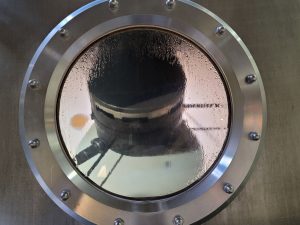
As one example, consider a yogurt fermentation system. Operators need verification at multiple points: confirming product loading, monitoring fermentation progress, ensuring complete discharge and validating cleaning effectiveness. An integrated approach might include sanitary sight glass windows at key points, positioned lighting for clear observation, cameras for continuous monitoring and wiper assemblies for condensing environments. This system-level thinking helps operators understand the entire process rather than isolated moments.
The same principle applies to whey processing and infant formula production. Changeover validation requires observation across multiple process points. Confirming CIP cycle effectiveness and verifying system readiness before the next batch all benefit from coordinated visibility solutions rather than individual components installed in isolation.
What does integrated visibility provide? Early detection across multiple process points, confident decision-making during critical transitions, reduced quality holds through faster verification, better training efficiency for new operators and stronger documentation to support quality audits.
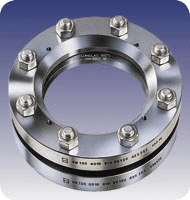
The equipment itself—sanitary sight glasses, process lighting, camera systems and wiper assemblies—works best as a coordinated system engineered and designed to address specific process applications and facilities, to reduce waste, enhance safety and visibility and ultimately, to optimize production.

Making It Work in Your Operation
Three questions can help processors identify where integrated visibility delivers the most value:
- Where do quality issues typically originate? The answer is often at transitions: between batches, during changeovers, or between processing and CIP cycles. These are exactly the moments when visual confirmation becomes most critical.
- Which equipment failures cost you the most? Consider not just repair time, but lost product value, extended downtime, and the cost of quality investigations. This calculation often reveals that investing in better observation capabilities for high-risk equipment pays for itself quickly.
- What can’t you see that you wish you could? Sometimes the answer is obvious, like accumulation at a spray dryer inlet. Other times it emerges from conversations with operators about the workarounds they’ve developed to compensate for limited visibility.
As processors invest in expanded capacity to meet surging protein demand, maintaining quality at scale requires moving beyond component-level decisions.
Process visibility should be treated as a system-level investment that supports the quality standards justifying premium pricing in today’s competitive dairy market.
The protein boom isn’t just about adding capacity—it’s about maintaining the quality and consistency that built your reputation in the first place. Integrated process visibility helps ensure that as your operation scales, your standards don’t slip.
The protein boom isn’t just about adding capacity—it’s about maintaining the quality and consistency that built your reputation in the first place. Integrated process visibility helps ensure that as your operation scales, your standards don’t slip. LJ Star offers a complete line of process observation equipment including METAGLAS® sight glasses, sanitary sight glass windows, LED process lights, camera systems, and wiper assemblies—all designed to meet ASME-BPE standards for dairy and pharmaceutical applications.

Subscribe to our Blog
Learn More
Categories
Certifications
Company
Goetze Safety Relief Valves
In The News
Industry Information
METAGLAS® Sight Glasses
PackExpo 2020
Sanitary Clamps
Sanitary Fittings
Sight Flow Indicator Benefits
Sight Glass Applications
Sight Glass Construction
Sight Glass Lighting
Sight Glass Lights
Sight Glass Process Vessel Camera
Sight Glasses
Trade Shows
Webcast