
Most processing facilities understand the important role process observation plays in ensuring quality, uptime and of course a safe environment. Whether it’s sight glasses, process lighting, cameras or other components, clear visibility isn’t optional for most applications. In harsh environments where corrosion, temperature and pressure are at extremes, a clear view is even more critical – as well as more complicated to create.
For instance, a major brewing company was losing thousands of dollars on batch after batch. The beer kept coming out sour, well outside the intended flavor profile, and no one could explain why. The team suspected the recipe, then the ingredients. They reformulated, swapped raw materials and audited their suppliers. The sour batches kept coming.
What they could not do was see inside the fermentation vessel while it ran. So they installed a sight glass-lighting-camera system and began watching a process they had been managing without visible feedback. The problem showed up within one cycle. The spray balls inside the fermenters were not firing correctly, leaving part of each tank uncleaned after every clean-in-place cycle. Residual cleaning material and bacteria were contaminating each batch.
The fix was not a new recipe. It was the ability to see into the tank. Once the sight system was in place, the problem was solved.
How Poor Visibility Compromises Process Control and Safety
Process observation equipment is treated as forgotten hardware on too many sites. The risk of that mindset can lead to the following problems:
- Safety incidents. Pressure buildup, leaks or undetected equipment stress put operators at risk; and, in harsh environments, the conditions are already hazardous.
- Lost batches and product waste. Foaming, contamination, fill-level errors or phase separation go unseen until the batch is compromised and costs rise.
- Misdiagnosis and false readings. Etched glass, fogging or glare can make a clean vessel look dirty or hide a real problem, sending crews to clean, adjust or repair the wrong chamber or pipeline.
- Unplanned downtime. Components inadequately specified or maintained fail prematurely and require emergency repairs.
All four problems are expensive. All four are preventable. When operators cannot see clearly, they manage on assumptions instead of evidence, and confidence in decisions erodes.

Integrate a Sight Glass, Lighting and Camera for Maximum Visibility
A single component cannot deliver a reliable view on its own. Each component of process visibility solves a different problem.
The sight glass should be a safe, durable window into the vessel. Lighting makes the interior visible. The camera extends viewing for remote monitoring, documentation and multi-user access across one or several processing facilities.
Not integrating the components into a unified assembly can cause the following problems:
- A camera mounted at a poor angle, or aimed through etched glass, returns a poor view.
- Lighting added without regard for how the operator or camera sees the process creates glare and reflection rather than illumination. Stainless steel interiors exacerbate the lighting challenge.
- A sight glass with inadequate lighting gives physical access to the vessel but no useful picture of it.
Blind spots and false readings are additional problems. These problems result from:
- Poor placement of the assembly, missing where visibility is most needed
- Improper glass leading to gradual etching and opacity
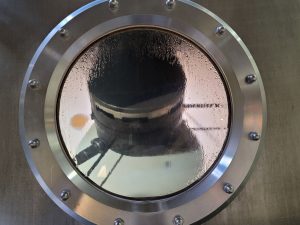
- Fogging, condensation and product accumulation blocking the glass surface
- Inadequate lighting that hides media fill level, foaming and separation
- Incorrect illumination angle creating glare across reflective stainless-steel surfaces
Coordinate the system from the start as a complete kit, matched to the viewing zone, the chemistry and pressure, and the operator’s actual line of sight.
Specifying the Glass, the Lighting and the Camera
Correct specification of each component ensures the necessary visibility.
Specify the sight glass materials for the process conditions
The most common and costly mistake when specing a sight glass is selecting the wrong glass. Confirm pressure and temperature ratings, chemical compatibility, mounting style and required certifications against the actual process.
A glass that performs in a mild application can degrade quickly under acidic, caustic, high-pressure, thermal-cycling or abrasive service. A chemical that is neutral at ambient temperature can turn aggressively acidic when the temperature rises. Two plants running the same process can show different etching due to small process temperature differences.
Fused construction overcomes the pressure, chemical and temperature exposure problems. METAGLAS® borosilicate sight glass resists chemical degradation roughly ten times better than soda-lime glass and operates to 572°F with pressure up to 230 psi.
The glass is one part of a stack-up. In addition, housing and gasket materials must match the process. A 316 stainless steel housing is standard for many sanitary and pharmaceutical applications, while duplex stainless steel offers stronger corrosion resistance for demanding applications such as oil and gas processing. Gasket chemistry must match the process media, because an incompatible gasket can leak or fail even when the metal and glass are appropriate. In corrosive service, protective shields made of mica, FEP or KEL-F extend life.
One mismatched material makes the whole assembly vulnerable
If condensation or accumulation of material is expected on a sight glass, specify an appropriate option for removing the obstruction. Options are wiper assemblies, spray rings or air-barrier nozzles. The latter two options are suitable for removing dust-carrying or high-viscosity media.
Size the lighting to the vessel
The goal is a clear, usable image for the operator. Match the process lighting to vessel size and viewing depth. Set the mounting position and angle to avoid glare, control reflections on stainless surfaces, supply enough lumens for the vessel and meet hazardous-location requirements.
Add a camera when remote monitoring is required
A process vessel camera allows visibility when manual observation can be unsafe or inefficient. Locations recommended for camera installation include elevated platforms or platforms that can accumulate ice, hazardous or explosion-rated areas, high-pressure and high-temperature environments, areas requiring documentation, or those with multiple stakeholders who need the same view. When specifying a camera, check the hazardous-location rating, mounting flexibility, low-light image quality, connectivity and service access.
A camera does not solve a bad view. It transmits it.
Plan Maintenance For a Quality View and Uptime
Treat sight glasses, lights and cameras as critical assets, not accessories. Deprioritized, they are addressed only after they fail, resulting in emergency labor, rushed replacements, and lost production.
A proactive program is straightforward:
- Inspect sight glass regularly for etching, clouding and pitting.
- Tag each unit and keep its inspection history.
- Verify gasket compatibility whenever process chemistry changes.
- Use protective guards.
- Document findings with photos.
- Use the manufacturer’s torque specifications at installation.
Replacement aligned with a planned shutdown costs far less than a 24-hour emergency turnaround.
Balancing Durability and Life Cycle Cost
The lowest purchase price does not result in the lowest total cost. The true total cost includes replacement frequency, downtime risk, labor, process loss, safety exposure and compliance gaps.
A low-cost component can appear to be a savings, but it transfers the cost of its poor performance to operations. Frequent replacement erases the upfront difference. Etching and haze trigger unplanned shutdowns. Emergency repairs add expedited freight and overtime. Missing documentation creates compliance risk. In the worst case, a standard glass ruptures with an operator standing inches away.
The right specification provides a good return on investment. Longer service life lowers total cost of ownership, proactive inspection enables replacement with planned shutdowns, and a fused safety sight glass reduces the risk of sudden catastrophic rupture that a standard glass carries. Our METAGLAS® sight glass, the #1 rated sight glass in the industry, has survived 6 million pressure cycles with no glass failure and is 4.5 times stronger than comparable products. Documentation to DIN 7079, DIN 7080, USP Type I and ATEX supports audit readiness, and LJ Star provides independent third-party performance documentation.
The better question is not which sight glass is the lower cost; it is what a failure costs for a process.
Engineer Visibility; Do Not Assume It
Process visibility should be engineered for the application. A sight glass, lighting and a camera, specified together and matched to real operating conditions, deliver safer operations, better process control, faster troubleshooting and the documentation that harsh-service facilities require.
Learn more about specifying process visibility systems by watching the free, on-demand webinar, How to Optimize Process Visibility in Harsh Environments. Then, Contact LJ Star application engineers for assistance with ensuring reliable visibility for your process applications.

Subscribe to our Blog
Categories
Certifications
Company
Goetze Safety Relief Valves
In The News
Industry Information
METAGLAS® Sight Glasses
PackExpo 2020
Sanitary Clamps
Sanitary Fittings
Sight Flow Indicator Benefits
Sight Glass Applications
Sight Glass Construction
Sight Glass Lighting
Sight Glass Lights
Sight Glass Process Vessel Camera
Sight Glasses
Trade Shows
Webcast