
In process manufacturing facilities across the country, a costly pattern repeats itself daily: equipment runs until it fails, alarms sound and maintenance teams scramble to patch things together. This reactive approach might seem like the right way to stretch tight budgets, but this practice is actually bleeding companies dry—and creating dangerous conditions in the process.
Scott Kloetzer, Director of Business Development at LJ Star, has witnessed this scenario countless times during visits to process facilities in a wide variety of industries. In a recent episode of the Processing Pros podcast, sponsored by Processing Magazine, he pulled back the curtain on the current state of maintenance culture in process manufacturing—and the picture isn’t always pretty.
Increase your ROI on Sight Glass Windows Using These Tips
Materials traceability is becoming an essential business practice to trace and certify sources for all parts and processes. It enables companies to track production, monitor issues, control recalls, or order replacement parts more easily. It helps highlight the importance of material selection at a project’s beginning or during the design phase.
Presenting the pros and cons for biopharmaceutical processing
Single use technologies (SUTs) entered the biopharmaceutical industry in the 1990s, and processors were quick to take advantage of this alternative to traditional stainless-steel tanks /equipment for production lines. Single use production runs a process through equipment one-time using high-performance polymers for disposable components that have been sterilized using gamma irradiation. Over time, companies have sifted through the pros and cons of both types of technologies, SUTs and stainless steel, to determine the best options for business operations.
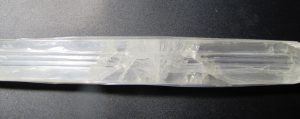 We have recently learned that inferior gauge glass, with a historically common industry name, from an overseas supplier has entered the North American market and does not meet accepted standards of safety and performance.
Gabe Montgomery, Engineering Manager, Tank Components Industries, an L.J. Star subsidiary located in Springfield, Missouri, is one of several L. J. Star engineers to serve on important ASME Bioprocessing Equipment (BPE) Committees. His work on the committee is part of the company’s contribution to advancing the technologies that shape our industry and to keep our customers informed on changes in the field. BPE held several meetings in San Diego, California in May 2018, and Gabe reports back on what he heard:
 Michael Bosley, one of L.J. Star’s Product Support Specialists, took part in ASME Bioprocessing Equipment (BPE) Committee Meetings, held May 7-10, 2018, in San Diego, California. As a leading supplier to the biotechnology industry, we take our responsibility to participate in advancing the industry very seriously. By participating in the work of these committees, we hope to stay on the leading edge of evolving technologies; at the same time, we want to share updates on the topics these committees are weighing with you, so you can stay up to date on industry trends.